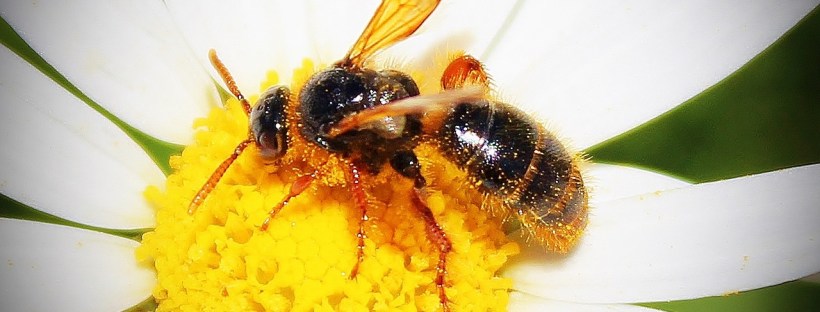
Recently, I watched an informative YouTube video about the death of honey bees. (Video is posted at the end of the article for your viewing pleasure!) It was extremely eye opening and prompted me to share with my readers about the honey bee crisis in our hands.
Most of us think of bees and how they sting or how they make delicious honey, however, honeybees do substantially more for us than we know. In addition to the delicious honey which has many benefits and uses, honeybees provide pollination for numerous agricultural crops.
In a statement from the USDA, bee pollination is responsible for more than $15 billion in increased crop value each year. About one mouthful out of three in our diet directly or indirectly benefits from honey bee pollination. Commercial production of many specialty crops like almonds and other tree nuts, berries, fruits and vegetables depend on pollination by honey bees. These are the foods that give our diet diversity, flavor and nutrition.
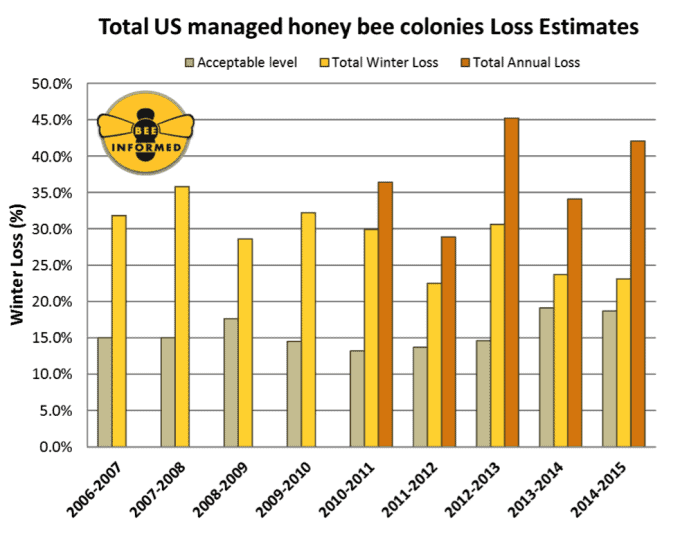
Figure 1: Summary of the total colony losses overwinter (October 1 – April 1) and over the year (April 1 – April 1) of managed honey bee colonies in the United States. The acceptable range is the average percentage of acceptable colony losses declared by the survey participants in each of the nine years of the survey. Winter and Annual losses are calculated based on different respondent pools. Source: Bee Informed
The Facts of Honey Bee Disappearance
Colony Collapse Disorder (CCD): The biggest problem facing the honey bee is with the Colony Collapse Disorder (CCD). Colony Collapse Disorder is a syndrome defined as a dead colony with no adult bees or dead bee bodies but with a live queen and usually honey and immature bees still present. No scientific cause for CCD has been proven.
Colony Collapse Disorder is somewhat of a mystery, the Agricultural Research Service, USDA’s internal research agency is conducting research in hopes to find the causes of Colony Collapse Disorder.
Pathogens: Varroa Destructor, a type of mite infects honey bees. The Varroa Destructor can only reproduce in a colony. It attaches to the bee and feeds on it to survive. A significant infestation can lead to death. The parasite Varroa Destructor is thought to be a possible contributor to Colony Collapse Disorder.
Pesticides: Exposure to pesticides has shown reduced immune functioning in honey bees and increases the risk of the honey bees contracting the gut parasite Nosema another species of parasite infecting the bee colony and potential cause of colony failure. However, some progress has been made in certain colonies in Europe by banning three pesticides and herbicides used in crops.
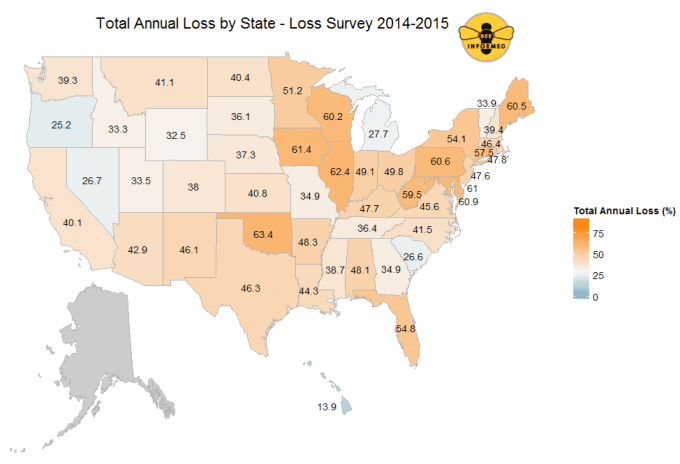
Figure 2: Total annual loss (%) 2014-2015 by state. Respondents who managed colonies in more than one state had all of their colonies counted in each state in which they reported managing colonies. Data for states with fewer than five respondents are withheld. Source: Bee Informed
Spread The Word! Get Involved!
If you are like me and enjoy the many benefits of honey and eating fruits and vegetables…let’s not forget about almonds! Educate yourself further and spread the word. Making a difference starts with one person, the more people know, the more we can start seeing a change come about.
Now is the time to be fully present in your life and pay attention to important matters such as the food we eat and how our food is grown and produced. We as a society are starting to become more aware of how we treat ourselves. It is also important to be aware of how we treat our environment.
Honey bees, although an afterthought for a lot of us, have great significance in our world. Every creature has its purpose, it’s up to us to utilize our resources effectively. You can read some great information and get more involved at Bee Informed.
As promised! A lovely YouTube gem on the Death of Bees. Take time to watch it, it is very educational and entertaining.
 The Graceful Soul